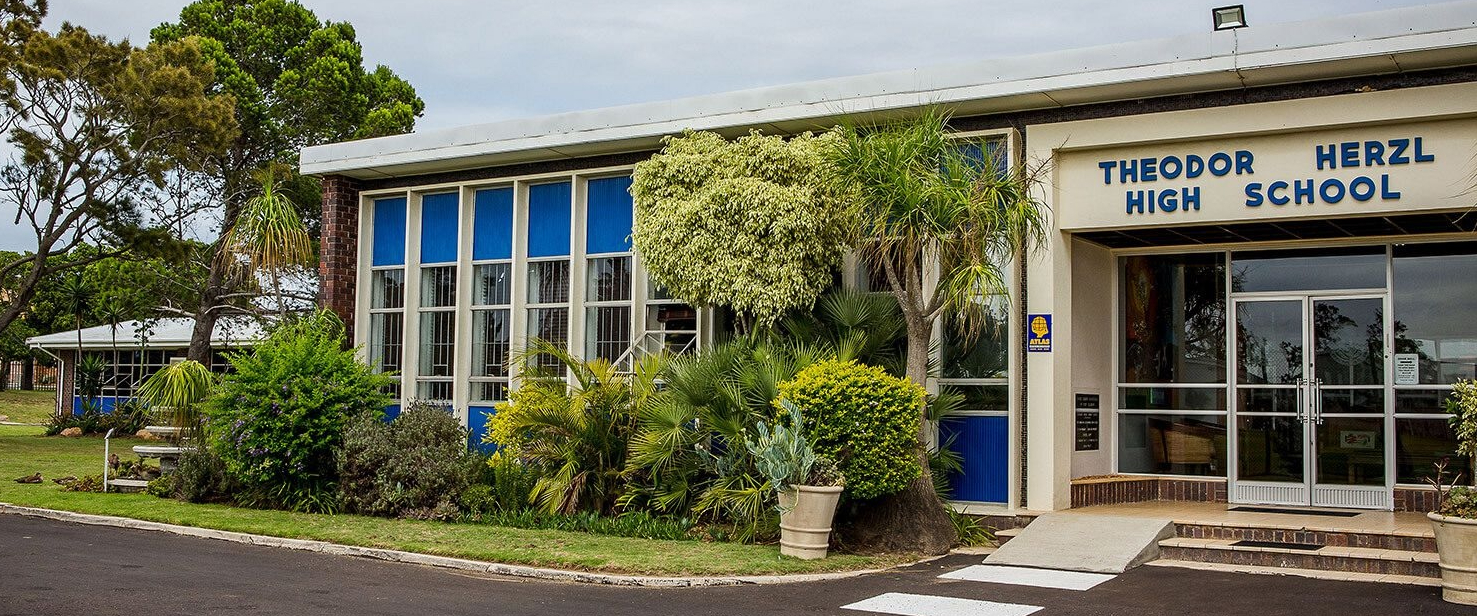
Theodor Herzl School, Gqeberha: Deep Seated Change is Possible

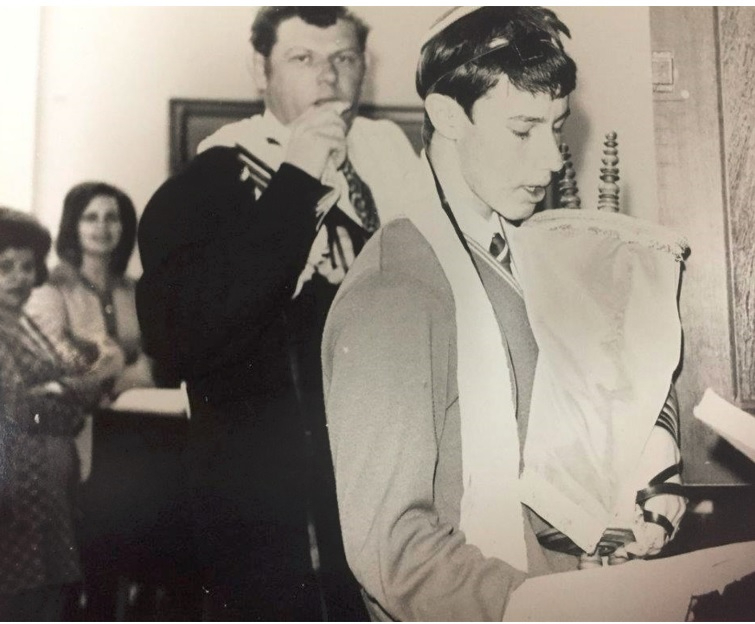
Number 125: During my time at Theodor Herzl School: 1963 – 1974, only Orthodox Jews were allowed entry. To my father’s z”l intense frustration, as a School Committee Member, he could not convince it to accede to a Legal Colleague’s application for his daughter to enter the school. Reason: Reform Jews Not Allowed!!
At our 2019 second Class Reunion, 45 years after Matriculating, also the School’s 60th Anniversary, Theodor Herzl still retained its Jewish Identity. We laid tefillin at Shacharit Tefillah, as we always did in “our time”, now in a beautiful Shul not there then.
At the Anniversary Function Port Elizabeth’s Rabbi spoke. Later some School pupils, now comprising a diverse range of religions and racial groups, offered a beautiful rendition of “Asimbonanga”: “We have not seen him”. Johnny Clegg had recently passed away. These talented musicians and vocalists gave a most moving tribute to both Clegg and Nelson Mandela. A scene unthinkable in our time!
Recently Maya Schkolne wrote in the Communal Magazine Dafka.Com. Entitled: “Dreaming of Diversity for Jewish Community Schools”: “We could begin with taking a leaf out of the book of Theodor Herzl School. This school, situated in Gqeberha – formerly Port Elizabeth – retains its Jewish history and essence, but has become largely multi-cultural even though it previously only admitted Orthodox Jewish pupils…. “Our pupils come from a wide range of social and ethnic backgrounds, resulting in a vibrant melting pot of cultures, which nurtures remarkable tolerance and mutual appreciation… Pupils of all faiths are welcome and the ancient festivals and life lessons so central to the Jewish faith are enjoyed and appreciated by everyone.” The changes in its school demographics were most likely initially pragmatically driven due to dwindling numbers in the Jewish community… Jewish community schools facing similar challenges in the future could look to this model as proof that we do not have to settle for one or the other. Moreover, this is a living example of how deep-seated change is possible”.
Clearly, constructive response to contextual change is possible. As Theodor Herzl himself said, “If you will it, it is no dream”!