9. That Remote, Untravell’d World
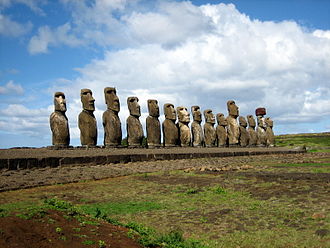
Time moves slow and fast. We have been on the ship now for close to seven weeks and it feels like forever! Last night was our 7th Friday evening Shabbat Service. It feels like they roll into each other, like last week’s one was yesterday. Counting Antarctica as one place, we have stopped at 17 places so far – each one different and distinctive in its own way. We were supposed to go ashore to number 18 this morning – Easter Island, but the swell is currently too large and so right now we can only look at this beautifully lush Island from the ship. From out here we can see quite clearly through the binoculars a few of the 887 haunting moai on the Island – those huge statues hewn from volcanic rock, that are so recognisable globally – even though so few people are able to physically get to the Island and see them “in the flesh”. Easter Island is, objectively, the remotest inhabited Island in the world. It is 2075 kilometres from the nearest other inhabited place which is Pitcairn Island – our next stop, which has only about 50 inhabitants! Hopefully the swell reduces and we can ferry into land tomorrow.
“I cannot rest from travel: I will drink Life to the lees: All times I have enjoy’d greatly, have suffer’d greatly, both with those that loved me, and alone, on shore, and when thro’ scudding drifts the rainy Hyades vext the dim sea…. Yet all experience is an arch wherethro’ gleams that untravell’d world whose margin fades for ever and forever when I move. How dull it is to pause, to make an end, to rust unburnish’d, not to shine in use! As tho’ to breathe were life! Life piled on life were all too little, and of one to me little remains….!” (from the poem “Ulysses” by Tennyson)
Each moment is a rich experience. Experiencing them is one thing. Remembering each one – quite another! Wonderful therefore that Sheryl is taking photographs!!
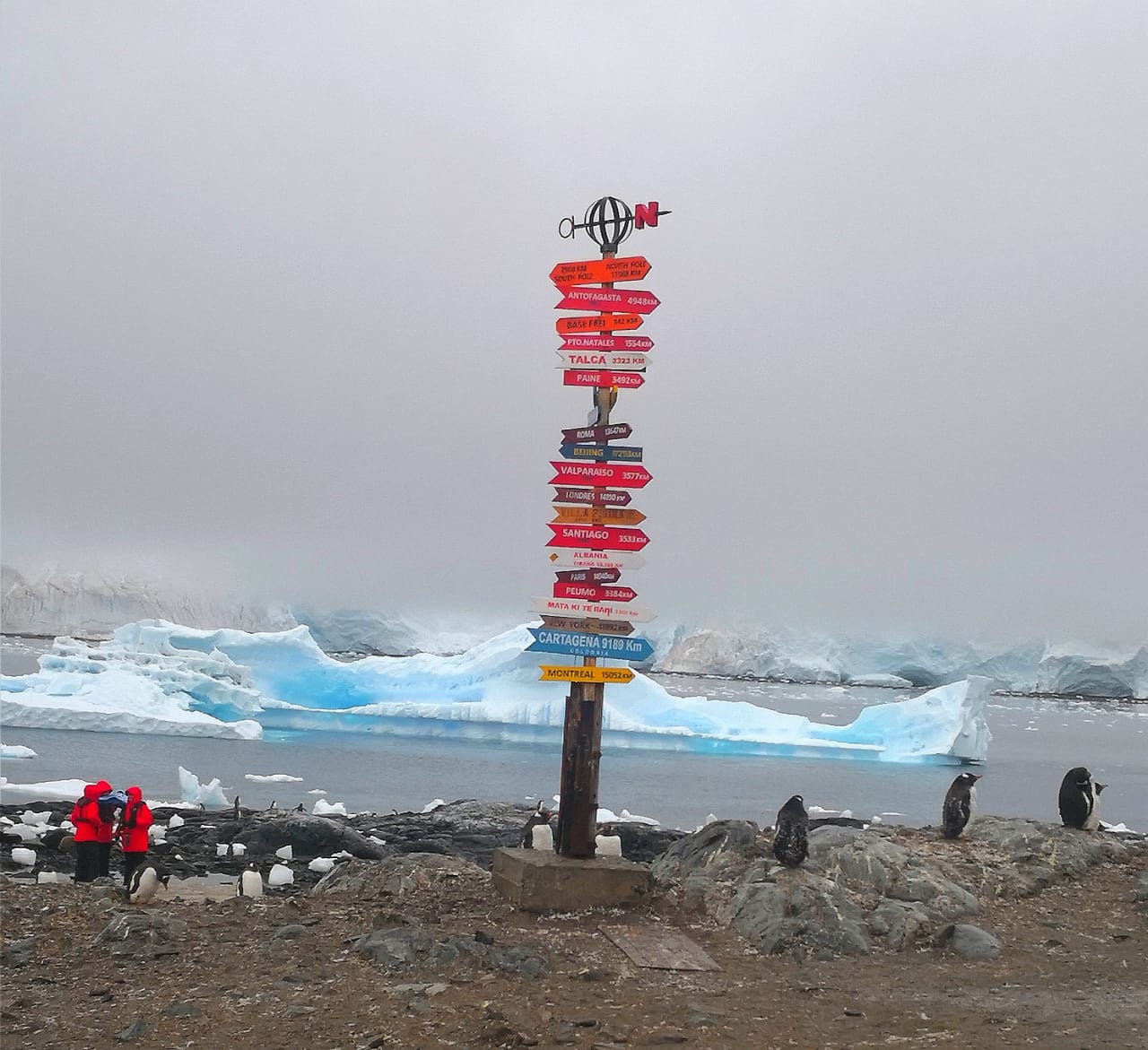
I checked in the archives and couldn’t find any family members living, past or present, in Antartica. That may be because no one lives permanently in Antartica. The Zodiacs move through the crisp 1 degree Centigrade air towards the small Chilean Base of Gonzalez Vidayla on mainland Antartica, manned by 15 Chilean Airforce and Navy personnel from November to March. (We never expected it to be this warm in Antartica). Penguins like flying fish racing alongside us, the pungent smell of penguin guano in the air, the icebergs and glaciers and black rock mountains. Penguins moulting, feeding their young. The astounding beauty – sailing through pristine Antartica. And the whales – so close up as to see their huge mouths and entire body. There was also the crab-eater seal on the drifting ice and penguins on another one. Sheryl keeps saying: “These icebergs are mind blowing. I don’t think I will ever get tired of them”. She just said it again.
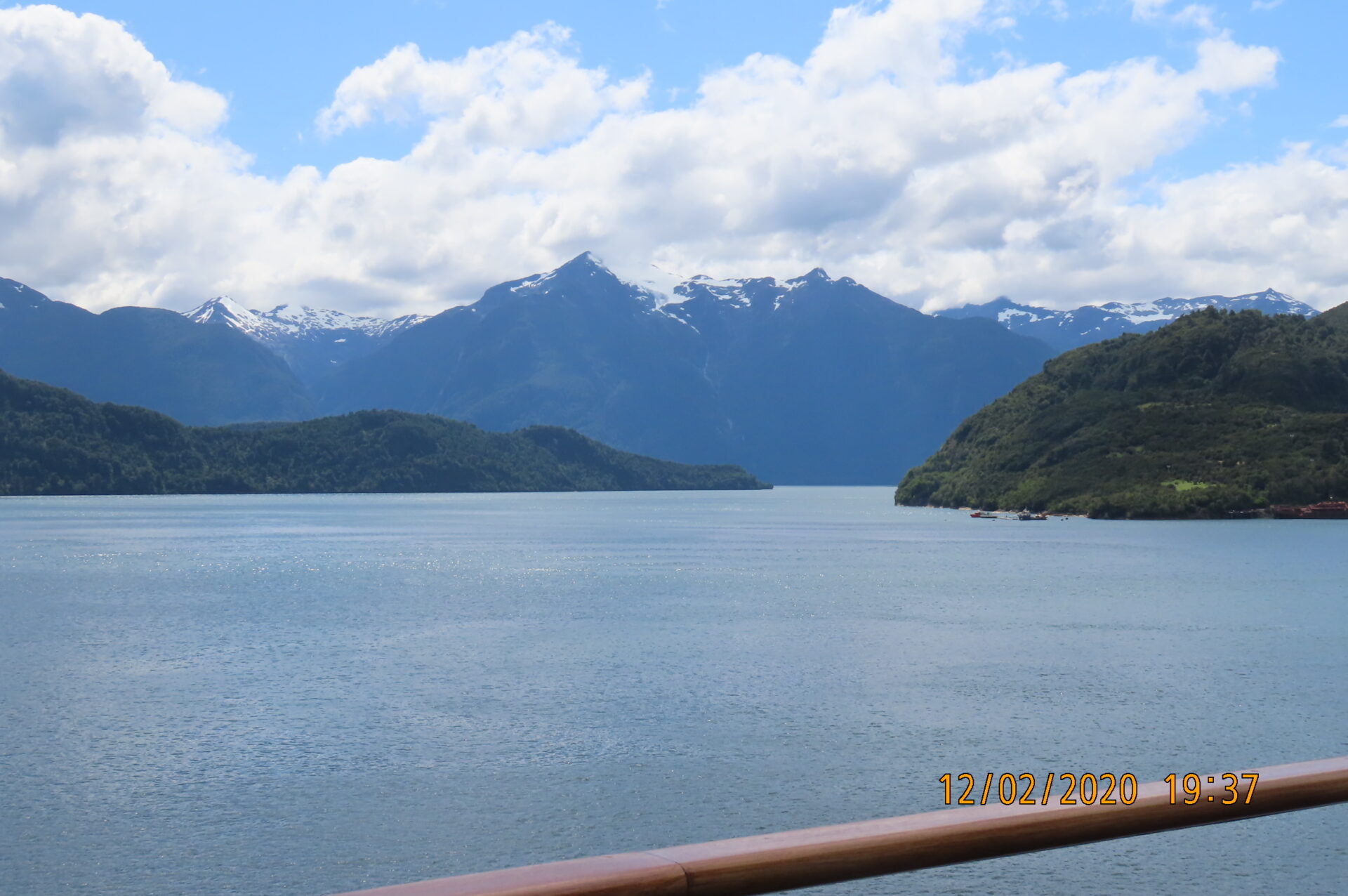
And then the spectacular Chilean fjords – the ice blue glaciers, waterfalls and lush green vegetation. Roughly speaking a fjord is a long, narrow inlet with steep sides or cliffs, created by a glacier.
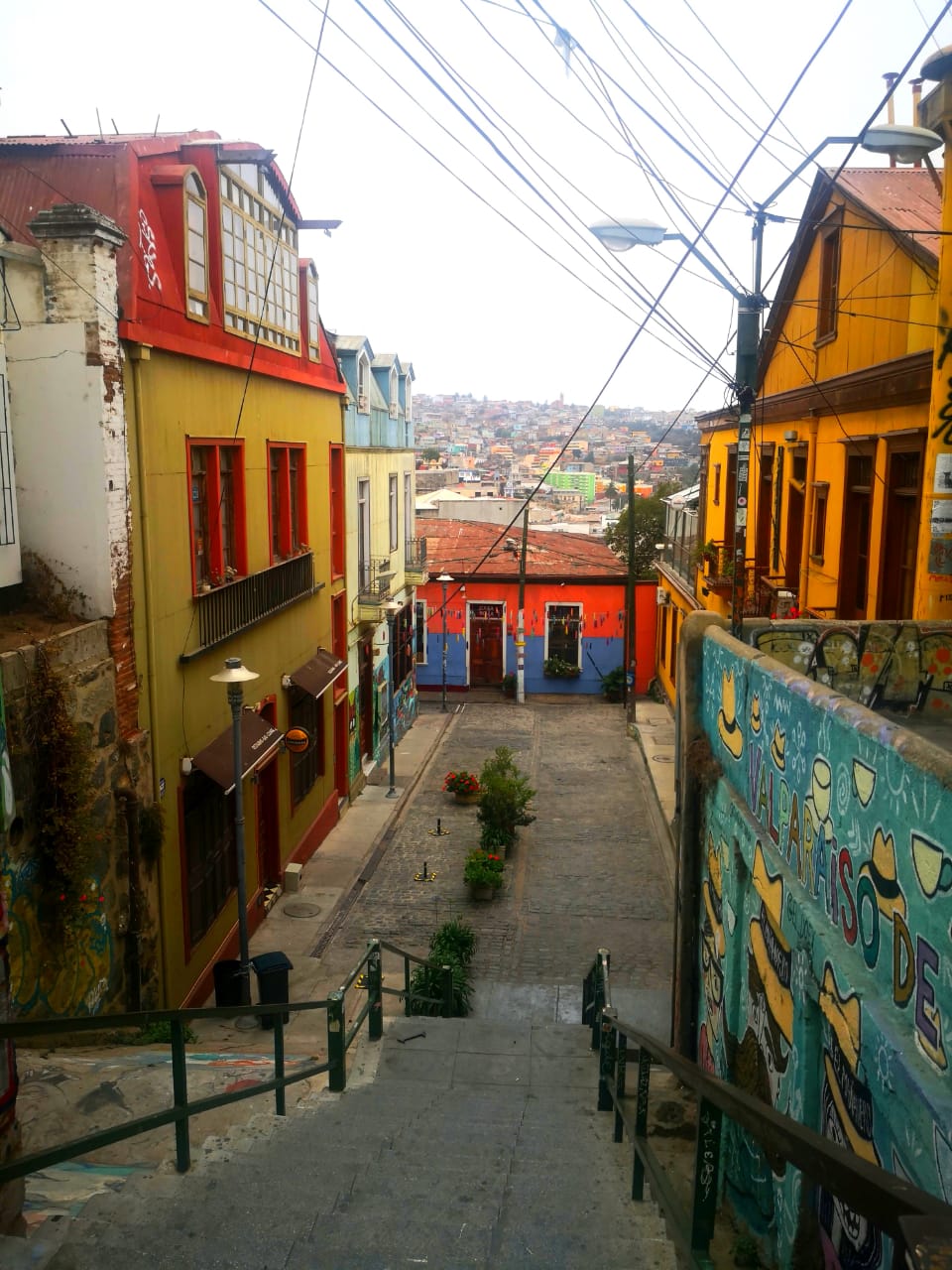
It is quite amazing how each person sees such different scenes in the same place. We look at the photographs of others who have passed through the same passages and places and their “eye”, the themes and topics they focus on, are so different. And how we relate to what we see and experience also diverges so sharply. Sheryl and I loved the street art in Valparaiso – the creativity, skill, bright colours, themes chosen. Sheryl captures it all so beautifully in her photographs. Others didn’t like it at all. “It turned me off. It made the place look unclean”.
And these places aren’t what you imagine them to be. On remote Robinson Crusoe Island there are no date palms nor sandy beaches at all!! It does have its own beautiful endemic birds, tree ferns and other native plants. It also has problems with invasive plant and animal species. Today about 850 people live on this Island where Alexander Selkirk was stranded on the then uninhabited Island for over four years and is said to have been the inspiration for Daniel Defoe’s novel: “Robinson Crusoe”. We purchased stamps at the local post office and posted our post cards! Lovely to explore a little – the cemetery which includes a memorial to those who perished in the Dresden, German Warship Sunk there in 1915, coffee at the only open coffee shop in the village, the caves that the first inhabitants slept in to escape the rats. Sadly it had been raining and with all the mud it was not going to be easily possible to climb the mountain or explore the Nature Reserve.
What is remote to us is central to the experience and identity of others. Polynesia has been as far away from my experience until now, as almost anything on this planet. It has been fascinating and a special experience to listen to and subsequently reflect on the presentations and stories of the two Polynesian members of the expedition team on the ship speaking about their “world” and experience: The more than 25 000 Islands in the Pacific and more specifically those within Polynesia. One of them lives on Easter Island, the other in French Polynesia. The connections in culture, language, DNA between the peoples of the different Islands, the history of seafaring – including the canoes they built. How they navigate using the night sky as their roadmap. The pride with which they relate who they are and where they come from. The centrality of family and clans. The mystery of the moai and how they help to join the spirits of today with those of yesterday. The tattoos that identify the clan and that connect them with their ancestors. “It’s all about how we honour where we come from and sharing the stories that help us understand who we are”.
It seems to me that it is all about that – whoever we are…..
Tennyson’s Ulysses continues to reflect on growing older: “The lights begin to twinkle from the rocks: The long day wanes: The slow moon climbs: The deep moans round with many voices. Come, my friends, ’Tis not too late to seek a newer world. Push off, and sitting well in order smite the sounding furrows; for my purpose holds to sail beyond the sunset, and the baths of all the western stars….” “Beyond the utmost bound of human thought….”
With some luck, we will be able to make it tomorrow to the shore of Easter Island and the opportunity to explore. Next is Pitcairn Island in a few days’ time – the perfect hideaway for the mutineers of the Bounty ship that found and settled on Pitcairn in 1789. Pitcairn is exposed, no natural harbour and often difficult to reach by ferry due to the swell of the ocean. Since leaving Robinson Crusoe, for the four days we were at sea before anchoring off Easter Island, I saw not one ship. This is not a main sea route – to put it mildly. Exceedingly few ships visit Pitcairn. There is no airstrip or way to get there other than by ship. We are told that fewer people visit Pitcairn Island each year than successfully summit Everest.
So may the swell of the sea be with us on 26/02/2020.
Written by Raymond


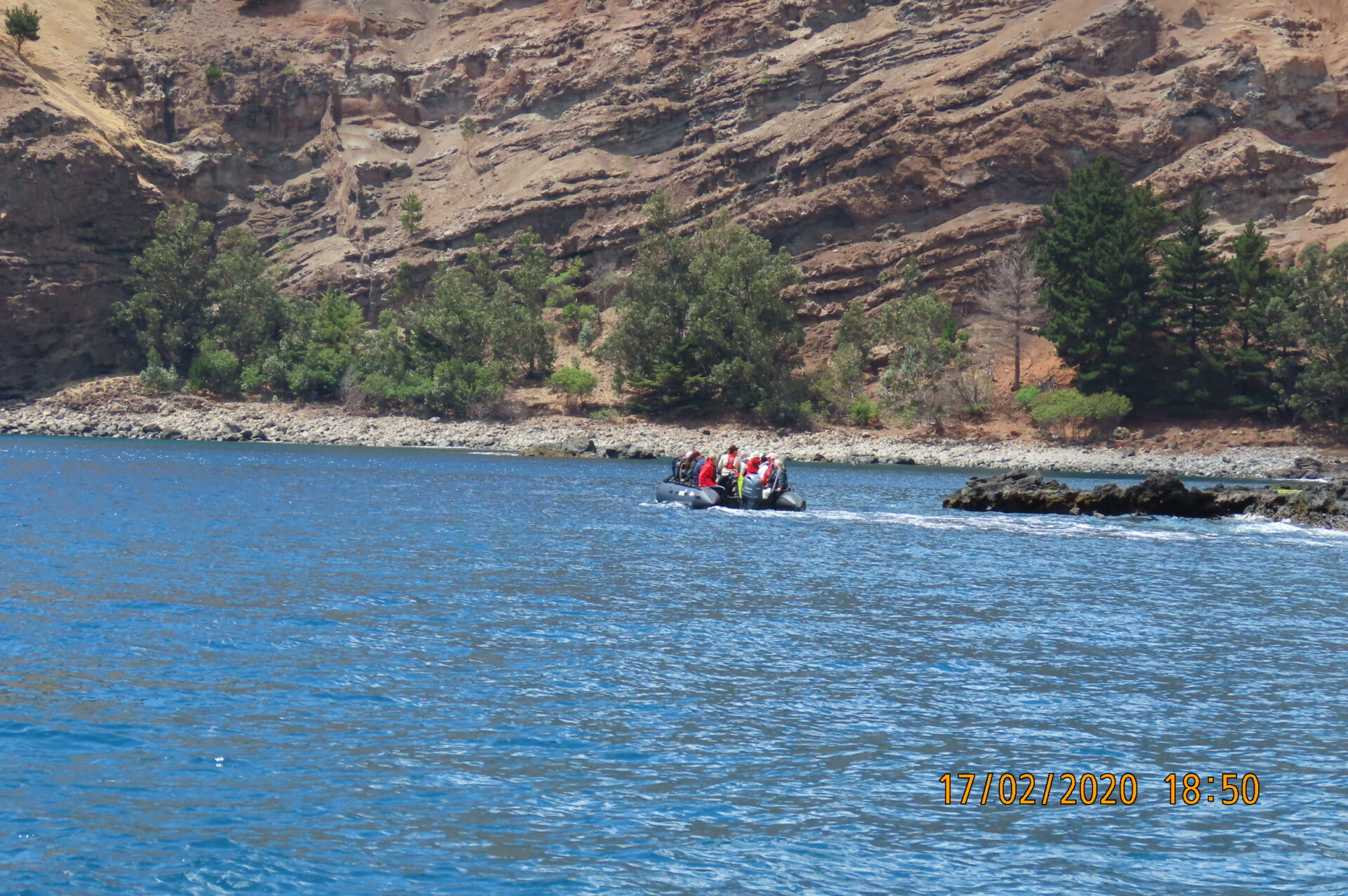
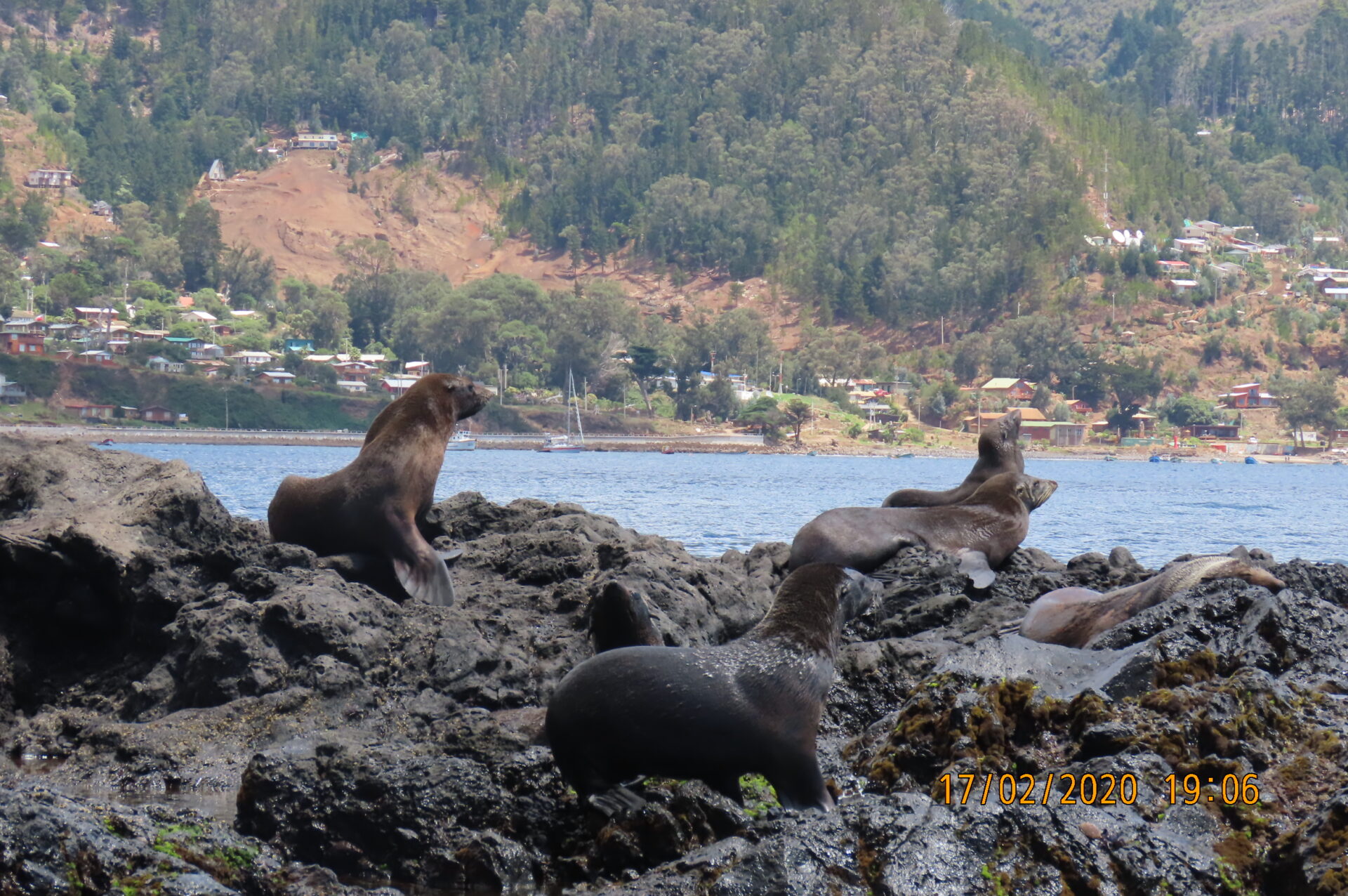
Fur Seals of Robinson Crusoe Island and its Capital San Juan Bautista in the background